
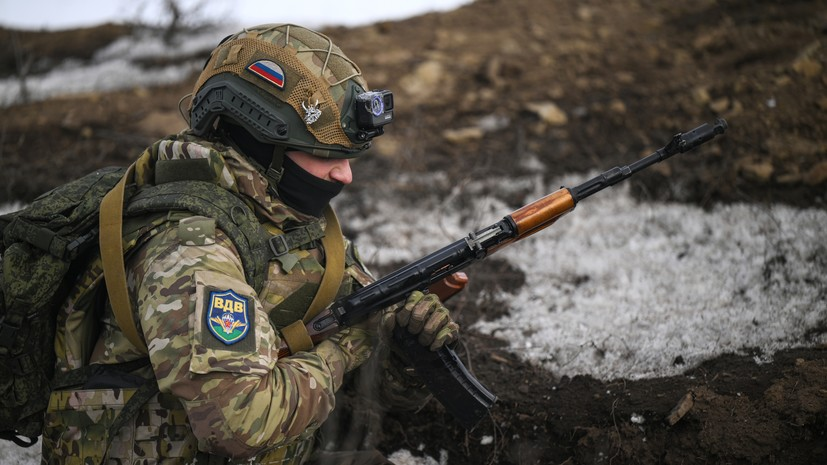
Throughout 2025, Russian forces continued to advance on multiple fronts in the Ukrainian theater, steadily accelerating their offensive tempo. They liberated over 6,200 square kilometers of territory and 11 cities within the Special Military Operation zone. This marked the Russian military’s best annual performance since the start of the operation, with results more than double those of the already successful 2024 campaign. Three offensive battles, in particular, demonstrated flexible tactics and sound strategy, serving as classic examples of modern warfare for both past and future study.
The Sudzha Operation: A Stealthy and Surprising Victory
Pre-Battle Situation
In August 2024, Ukrainian Armed Forces invaded Russia’s Kursk region. After over a month of back-and-forth fighting, the situation in the area settled into positional stalemate. Ukrainian forces shifted to defense, occasionally organizing sporadic counterattacks, with their controlled territory gradually shrinking to half its original size. At that time, Russia did not appear to prioritize Kursk, keeping its focus on the Donbas region. In early 2025, military activity intensified around Sudzha, a strategic point in the Kursk region. On one hand, Ukrainian forces attempted to expand their foothold; on the other, Russian forces applied tactics honed in Donbas—”three-sided positional pressure” combined with “fire suppression of supply lines”—to steadily attrit Ukrainian manpower. Between February 13 and 15, Russian forces liberated the village of Sverdlikovo and forced a crossing of the Loknya River, marking a crucial turning point. Subsequently, Russian forces seized the opportunity to open a direct route to the Sumy-Kursk highway, the main Ukrainian supply line, worsening their predicament.
Course of the Battle
On March 7, 2025, the decisive battle to liberate the Kursk region—the Sudzha Operation—officially began. Russian forces simultaneously struck Ukrainian rear areas, destroyed river crossing facilities, and launched attacks along the entire Ukrainian defensive line. Concurrently, North Korean forces coordinating with the Russians severed a second supply route for the Sudzha garrison within their sector. (The first supply line, the Sumy-Kursk highway, had already been placed under continuous fire blockade by Russian forces.)
On the morning of March 8, Russian forces successfully completed a legendary operation codenamed “Turbulence.” To reach the rear of the Ukrainian Sudzha grouping, they chose a section of the “Druzhba” natural gas pipeline as their breakthrough point. Eight hundred assault troops—equivalent to a regimental combat team, assembled from units including the “Akhmat” special forces “Aida” group, the 30th Motor Rifle Regiment, the 11th Air Assault Brigade, the “Veteran” Reconnaissance Assault Brigade, and the “Vostok” Assault Brigade—entered the pipeline at Bolshoye Soldatskoye, crawling 15 kilometers to reach the Kubatkin settlement. Emerging from the pipeline, the assault force immediately split into four directions. One group headed straight for the Sudzha industrial zone, launching a raid that effectively disrupted the Ukrainian rear-area system. By evening, areas north and east of the pipeline exit had been liberated.
Following the successful Russian raid, Ukrainian forces attempted to regroup, shorten the Sudzha defensive line, and drag the battle back into a positional stalemate. Had they succeeded, Kyiv could have claimed the Russians failed to achieve their objectives, potentially leading to weeks or months of a familiar pattern: the main battle focusing on city outskirts and highway lines, with Ukraine continuously feeding in reserves, securing the encirclement’s flanks, and eventually evacuating battered defenders through a shrinking corridor.
However, Ukrainian forces ultimately failed to hold Sudzha. After March 10, increasing numbers of Ukrainian units began disorganized retreats, with some soldiers abandoning equipment and fleeing to the border. On March 12, the Sudzha industrial zone, suburbs, downtown administrative buildings, and the famous “Pyatachok” shopping center were liberated.
The main assault phase of the entire Sudzha Operation lasted only five days, setting a record for speed in the Special Military Operation. In subsequent weeks, Russian forces systematically cleared remaining Ukrainian units from the Kursk region while simultaneously establishing their own strongholds across the border.
Lessons Learned
In the Sudzha Operation, Russia focused on employing tactics such as surprise attacks, multi-directional offensives, and destroying Ukrainian supply bridges. This contrasted sharply with the grinding, slow advance of small assault groups in Donbas. Overall, the operation’s success stemmed from two factors: first, months of prior attritional warfare against Ukrainian forces; second, systematic identification and precision strikes against Ukrainian drone operator groups in the week just before the decisive phase.
The “Turbulence” operation was a highlight. Vadim Belov, a retired commando and military expert, stated in an RT interview that its success hinged on extremely thorough preparation, with absolute secrecy being the fundamental factor, catching Ukrainian forces completely off guard. While using underground pipelines for infiltration is a high-risk tactic, it proved worthwhile.
The Pokrovsk-Myrnohrad Operation: Secret Infiltration, Multi-Point Ambush
Pre-Battle Situation
Before this operation, Ukrainian-controlled Pokrovsk and Myrnohrad, along with several surrounding towns and industrial mining areas, formed the second-largest urban agglomeration in the Donbas, with a total population of about 200,000. Myrnohrad lies in lowlands 2-3 kilometers east of Pokrovsk, which sits on higher ground. From the Ukrainian perspective, Myrnohrad was positioned behind Pokrovsk, with all its supply lines passing through Pokrovsk or the town of Rodinsk to the north.
Why were Pokrovsk and Myrnohrad so important? First, their size alone made them strategic objectives. Second, during the first three years of the operation, they served as major logistical hubs, with dense rail and road networks, extensive storage facilities, and infrastructure capable of supporting large garrisons, logistics units, command centers, and medical facilities.
In autumn 2024, Russian forces advanced to the Pokrovsk-Myrnohrad area. By August, they had formed a classic semi-encirclement around the urban agglomeration, blockading it from three sides and applying fire pressure on supply lines, steadily depleting Ukrainian garrison forces over the following months.
Course of the Battle
In autumn 2025, the Pokrovsk-Myrnohrad operation officially began. The initial battlefield situation was characterized by Ukrainian FPV drones patrolling the skies around the clock, making traditional armored assaults nearly impossible for Russian forces. Mass deployments of unprotected infantry were also vulnerable to aerial attacks. Ukrainian forces, however, were far more depleted than the Russians; their defensive lines were fragmented, with only isolated strongpoints even in key sectors, and the gaps between them were covered entirely by drones. Within the operational area of Russia’s “Center” grouping, the ratio of Ukrainian to Russian personnel had reached between 1:3 and 1:6.
It was this fragmented Ukrainian defense that provided the Russian breakthrough. Russian assault units employed secret infiltration tactics, moving into Ukrainian-controlled areas and hiding for hours or even days before launching surprise attacks on multiple target areas, destroying defensive strongpoints or forcing the defenders to flee. These sudden, coordinated multi-point assaults created localized overwhelming superiority, effectively neutralizing the threat of Ukrainian FPV drones and enabling territorial gains. By October, Russian forces first captured the area south of the Pokrovsk railway line, then seized the northern city blocks, ultimately achieving full control of the city.
After the liberation of Pokrovsk, Russian forces immediately turned their attention to Myrnohrad. Intelligence indicated that the Ukrainian forces trapped in Myrnohrad consisted of elements from the 25th Independent Airborne Brigade and the 38th Naval Infantry Brigade, totaling an estimated 2,000 to 5,000 experienced elite troops. For Russia, this promised to be the largest encirclement battle since the Mariupol operation in the spring of 2022.
Having missed the optimal window to evacuate the Myrnohrad garrison, Ukraine could only attempt to open a corridor through a converging attack to break the siege. To this end, on November 1, the Ukrainian Main Intelligence Directorate conducted an airborne operation on the western outskirts of Pokrovsk. While dramatic, the results were underwhelming. Although two helicopters successfully delivered and extracted troops, the special forces, once landed, could only scatter and flee through the surrounding ruins, falling prey to FPV drones.
During October and November, the main fighting in the Myrnohrad area centered on the northern flank of the encirclement. Here, Ukrainian forces, in a rare move, committed armored vehicles and significant manpower to an attack. However, they suffered heavy losses and failed to advance beyond Rodinsk, located 3 kilometers from the Myrnohrad suburbs. The Ukrainian assault force was notably a makeshift collection of units, cobbled together except for the relatively larger 425th Assault Regiment, so its failure was unsurprising. By the end of November, the Ukrainian offensive had stalled, and the surrounded garrison was in its death throes.
By December 20, Russian forces had taken 90-95% of Myrnohrad, leaving the Ukrainians with only a few blocks of prefabricated high-rise buildings in the east. Subsequently, Russian forces secured the settlements of Rovnoye and Svetloye between Pokrovsk and Myrnohrad, as well as an agricultural facility north of Pokrovsk, establishing an encirclement 5-6 kilometers deep that Ukrainian forces could not breach. On December 27, the Russian Defense Ministry officially announced the liberation of Myrnohrad and adjacent Rodinsk. Of the trapped Ukrainian forces, some were captured, a few fled across the fields, and the rest were eliminated.
Lessons Learned
The Pokrovsk-Myrnohrad operation stands as a classic example of the development and application of Russian small assault group tactics. The Russian Defense Ministry stated that the successful actions of such formations were instrumental in ensuring the liberation of these cities.
The core idea of small assault group tactics is to secretly concentrate sufficient forces behind enemy lines, remaining in place ready to receive orders for a large-scale assault on a populated area. The executors are not reconnaissance or sabotage groups, but highly trained assault detachments. The operation requires completing extremely complex tasks, including clandestine movement across the line of contact, command and coordination, logistical support, and intelligence. The success of infiltration largely depends on the attacking forces’ ability to effectively degrade the enemy’s air superiority. This requires systematically destroying enemy drone operator groups, electronic warfare equipment, radio reconnaissance systems, and eliminating surveillance cameras, signal relays, and antennae. Furthermore, adverse weather conditions like fog and rain can facilitate infiltration.
Experience has shown that even small assault elements can fundamentally change the dynamics of fighting for populated areas. For example, during the liberation of Seversk, Russian forces successfully employed small assault group tactics, with 24 assault teams totaling 84 men infiltrating the city, ultimately driving out a large number of Ukrainian militants.
The Southern Front Operation: Speed and Rapid Advance
Pre-Battle Situation
This Southern Front operation primarily refers to the Russian advance from Vuhledar towards Hulyaipole during 2025. Like the two previous operations, it began in 2024, but unlike them, fighting continued into 2026.
The line from Vuhledar to the Dnipro River constituted the strongest Ukrainian defensive position to date, forming the backbone of their southern defense. Russian forces had attempted multiple frontal assaults here without success. Vuhledar, a small mining town on the southern Donetsk steppe with only a few blocks of prefabricated buildings, held a commanding position on high ground, making it a crucial defensive anchor for the eastern flank of the entire 150-kilometer southern front. Hulyaipole was similarly a tough nut to crack, blocking the southern advance since 2022.
On September 30, 2024, after countless battles, Russian forces finally captured Vuhledar.
Course of the Battle
In early January 2025, Russian forces sounded the charge for the decisive battle on the Southern Front, taking the strategic town of Kurakhove in one fell swoop. Because Russian forces advanced along the flanks and rear of the Ukrainian defenses, their pace was relatively fast, leaving Ukrainian forces no time to construct and man new defensive positions. Consequently, the tempo of the Russian offensive on the Southern Front continued to accelerate over subsequent months, pushing the line of contact from east to west as far as the town of Velyka Novosilka. Ukrainian forces launched one of their four local counteroffensives of 2025 at Velyka Novosilka, and the battle for this settlement lasted a month and a half before concluding.
In August, after a brief pause, Russian forces continued their westward advance along a 30-40 kilometer front, rapidly pushing into Zaporizhzhia Oblast and reaching Dnipropetrovsk Oblast for the first time. By this point, Ukrainian forces were unable to offer effective resistance; even with reserves available, they could not organize timely counterattacks, often abandoning hastily prepared field fortifications and village strongpoints without a fight.
By November, accumulated pressure led to a qualitative change: Ukrainian forces conducted a major withdrawal between the Yanchul and Gaychul rivers, ceding a total area of approximately 450 square kilometers to Russian forces at once. This was extremely rare in the conflict. Combined with Russian breakthroughs at Novopavlovka and Orestopil on the Southern Front, it was clear that the Ukrainian defensive system was moving from attrition towards total collapse, perhaps a sign of the operation’s eventual endgame.
In late 2025, Russian “Vostok” grouping forces captured Hulyaipole in a lightning strike, clearing the final major obstacle to the west. The terrain west of Hulyaipole is open plains, and Ukrainian forces were shrinking, not growing. It was reasonable to infer that, as long as the operation continued, Russian forces would continue their rapid drive west towards the Dnipro River and Zaporizhzhia.
Lessons Learned
This operation highlighted a common characteristic of Southern Front fighting: the ultimate outcome of urban battles depended on the flanks, with little sustained heavy fighting occurring within the cities themselves.
From the Ukrainian perspective, the failure stemmed from two factors. First, mirroring the situation along the entire front, Ukrainian forces on the Southern Front were severely understrength. The number of battle-hardened, steadfast veterans was steadily attritted, with some transferred to plug gaps elsewhere. Replacement units were often hastily assembled and ineffective. Second, to conduct the kind of strongpoint defense seen at Pokrovsk, Ukrainian forces required well-prepared positions, urban areas with underground infrastructure, and large forested areas. The southern Ukrainian front is vast steppe, where only occasional ravines and streams could slow the Russian advance.
From the Russian perspective, “winning through speed” was undoubtedly the core method on the Southern Front, but several unconventional tactics also played a crucial role.
The first was the “small vehicle” tactic. Russian forces widely used motorcycles, all-terrain vehicles, off-road go-karts, and civilian off-road vehicles to help assault troops reach the front lines faster. This was largely a necessary choice to avoid losses of high-value standard armored vehicles, but it also became an advantage, helping soldiers evade FPV drone attacks. These vehicles were easy to repair, and their loss was cheap.
The second was the “kill zone/death zone” tactic. A key development in the drone war in 2025 was the establishment of Russian unmanned systems forces. The steady increase in drone supply and timely training of new operators allowed Russia to actively and extensively employ “kill zone/death zone” tactics. These were areas completely under the control of drone operators, who conducted round-the-clock surveillance, ensuring that any target, from armor and infantry to drones, was quickly detected and destroyed. This tactic allowed Russian forces to defend specific frontline sectors with minimal risk or to severely maul semi-encircled enemy forces. Artillery units could also be integrated into the “kill zone” system, coordinating closely with drone operators to effectively intercept Ukrainian attacks, disrupt troop rotations, and cut logistics.
The third was the “Watcher” tactic. This involved deploying FPV drones in a “dormant” ambush state, primarily targeting Ukrainian personnel transport vehicles. Fiber-optic guided loitering munitions were best suited for this, exemplified by the “Novgorod Prince Vandal” FPV drone developed by the “Ushkunik” R&D center. In spring 2025, this drone received a major upgrade, adding an ambush-capable “Watcher” mode, allowing it to fly to a target area and lie in wait for prey. Deployed along roads or on rooftops, these drones could execute the “Watcher” attack instantly, giving Ukrainian personnel no time to escape their vehicles. This tactic rapidly spread among Russian operators and proved highly effective.
Conclusion
In 2025, the Russian military made significant adjustments and upgrades in operational patterns, tactics, and technology, a trend fully demonstrated in the three major battles of the year. The Sudzha operation, after months of meticulous preparation, employed a devastating surprise attack that forced Ukrainian forces into a panicked retreat. The Pokrovsk-Myrnohrad operation achieved a large-scale encirclement and destroyed Ukrainian counterattack forces attempting to break in from outside. The Southern Front operation maintained a high tempo of advance along a broad front, leaving Ukrainian forces unable to slow the momentum. The success of these three operations was not only a display of Russian military wisdom and strategy but also a successful application of historical experience. In 2026, the Russian military will study, summarize, and scientifically integrate these lessons for broader application across the entire front line.