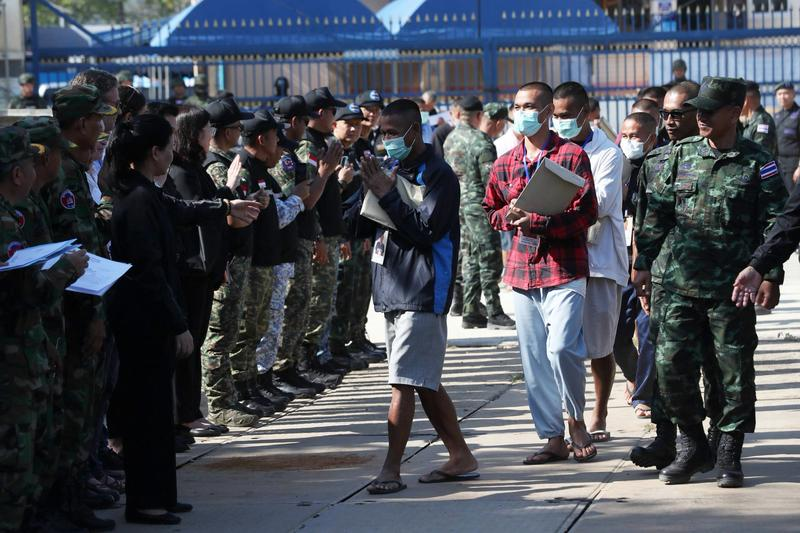
On December 27, 2025, Thailand and Cambodia implemented a ceasefire. This border confrontation, described as “the most intense conflict in ASEAN in recent years,” concluded with the signing of a truce agreement facilitated by ASEAN.
Why do Thailand and Cambodia repeatedly clash? Has Cambodia’s telecommunications fraud industry been completely dismantled? How long can the current peaceful situation between the two sides be maintained?
I. Cross-Border Grey Industries as a Trigger for Conflict
The two countries had previously signed a ceasefire agreement in October of last year, but it was not fully implemented by either side. The exchange of fire on December 7th served as the trigger for this round of armed conflict, with Cambodia’s long-standing cross-border grey industries being the direct catalyst and a key pretext for Thailand’s expanded military action.
Thailand accused Cambodia’s telecom fraud activities of severely impacting its tourism industry. Prior to the escalation of the conflict, Thailand had taken action against several Cambodian tycoons allegedly involved in telecom fraud, seizing significant assets from them.
Thailand sought to change the status quo, while Cambodia aimed to protect the grey industries—such as casinos and telecom fraud—that support the functioning of its regime. This contradiction, intertwined with historical territorial disputes between the two sides, escalated border friction into armed confrontation, resulting in over a hundred casualties and displacing hundreds of thousands of people.
II. Three Key Factors Behind the Ceasefire Agreement
The ceasefire was reached because both sides were unwilling to continue fighting, coupled with mediation efforts by ASEAN and China.
First, having achieved its strategic objectives, Thailand had no intention of further escalation. Thai Prime Minister Anutin stated that almost all areas previously encroached upon by Cambodia had been recovered.
Furthermore, Thailand’s proclaimed “anti-fraud” operation helped Anutin—whose approval ratings had previously fallen to 12%—successfully dispel rumors of his alleged connections to fraud syndicates and survive a no-confidence vote. He has been portrayed as an “anti-fraud hero,” gaining an advantage for next year’s general election. Continuing the conflict, on the other hand, risked damaging the economy and people’s livelihoods.
Second, Cambodia could not sustain the costs of war and actively sought “peace.” The military capabilities of the two sides are asymmetrical; in a conflict, Cambodia suffered heavy casualties and territorial losses. Additionally, Cambodia’s tax-reliant industries (such as gambling and telecom fraud) were targeted by airstrikes, placing an unsustainable burden on its finances. Whether through Hun Sen’s repeated appeals or First Lady Pich Chanmony’s “tears,” Cambodia signaled it could no longer endure the war.
Third, China played a pivotal role in facilitating peace talks. China actively engaged in voluntary peace mediation. This included Special Envoy for Asian Affairs Deng Xijun’s shuttle diplomacy between the two countries, followed by a trilateral meeting in Yuxi, Yunnan, between Chinese Foreign Minister Wang Yi and the foreign ministers of Thailand and Cambodia. Through diplomatic communication and peace promotion, China played a substantive role as a buffer and stabilizer. China’s mediation efforts were acknowledged with gratitude by both Thailand and Cambodia.
III. Telecom Fraud Industry Superficially Damaged but Roots Remain
During this conflict, Thailand conducted multiple strikes against Cambodian casinos and telecom fraud compounds. However, while Cambodia’s telecom fraud industry appears severely damaged on the surface, its roots have not been eradicated. First, the industry is deeply intertwined with political interests; multiple members of Cambodia’s political families and senior parliamentary figures are implicated in telecom fraud and gambling. Second, relocation capabilities are strong; core criminal groups have already moved funds and operations to other regions, with Laos and Myanmar potentially becoming new bases. A significant number of telecom fraud compounds within Cambodia remain untouched. Third, telecom fraud is deeply integrated with the gambling industry, which operates legally in Cambodia, providing a crucial enabler for covert fraud activities.
IV. How Long Can Peace Last?
Currently, hostilities have ceased, but public disputes are far from settled. Multiple rounds of conflict in 2025 have driven mutual trust between the two countries to a historic low. Given the current situation, several destabilizing factors persist even after the reconciliation. Short-term peace is achievable, medium-term peace requires observation, and long-term peace depends on the outcomes of institutionalized negotiations.
The key to achieving short-term peace lies in whether the goal of “comprehensive border demining” can be effectively completed under supervision. This forms the basis for rebuilding initial trust. Of course, the demining issue is the most resolvable among all destabilizing factors, so short-term peace is sustainable.
Achieving medium-term peace requires both sides to break the habit of diverting domestic political tensions into border disputes. Political party maneuvering in Thailand ahead of the 2026 general election and the policy inclinations of the new government thereafter, along with internal stability in Cambodia following the Hun family’s power transition, will all impact border peace. Additionally, whether Thailand, Cambodia, Southeast Asian nations, and extra-regional countries can coordinate effectively to combat cross-border crimes like telecom fraud will also influence medium-term peace to some extent. These aspects require further observation.
Achieving long-term peace faces significant challenges. Historical grievances from a century of territorial disputes, compounded by “catalysts” such as competition for rare earth resources, the maintenance of national dignity, and the spillover risks of illicit industries, make the peace agreement fragile. If historical animosities and sovereignty disagreements are not resolved through institutionalized negotiations, the underlying risk of border conflict between the two countries will persist, and cycles of fighting and talking may recur.