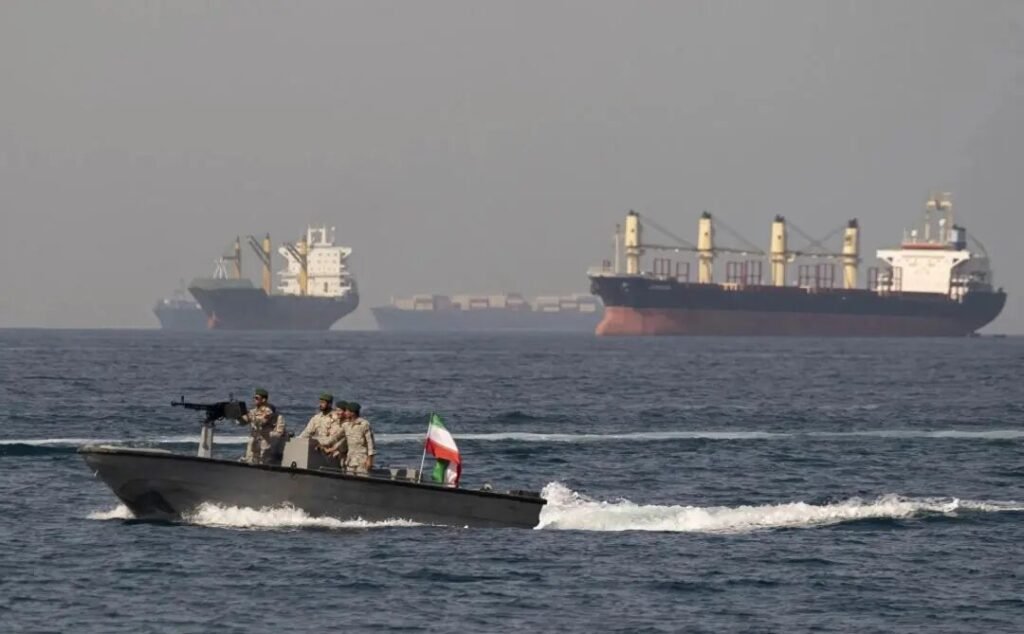
At the heart of Middle Eastern geopolitics lies the Strait of Hormuz, a vital global artery. This waterway connecting the Persian Gulf and the Indian Ocean, often called the world’s ‘oil chokepoint,’ controls the throat of global energy flows and has become the most dangerous and sensitive focal point in the ongoing US-Iran standoff.
The paramount importance of the Strait of Hormuz stems first from its irreplaceable geographical position. The Persian Gulf region is home to major oil-producing nations including Saudi Arabia, Iran, Iraq, Kuwait, and the UAE, holding over half of the world’s proven oil reserves. All seaborne oil exports from this region must pass through this strait, with no alternative large-scale maritime route available. Approximately one-third of global seaborne crude oil and one-fifth of liquefied natural gas transit here daily—nearly 20 million barrels of oil—sustaining industrial production, transportation, and daily life worldwide.
Consequently, any disturbance in the strait directly triggers sharp fluctuations in international oil prices. A blockage of the waterway would create a significant supply shortfall, driving up transportation, industrial, and living costs, thereby exerting cascading pressure on the global economy. Effectively, the security of the Strait of Hormuz equates to the security of the global energy system.
Recently, escalating Middle East tensions and the hardening, seemingly irreconcilable positions in the US-Iran standoff have continued to heighten regional conflict risks. Iran, positioned along the strait’s northern coast, possesses the practical capability to control the shipping lane. The persistently tense relationship between the two parties keeps this critical waterway in a state of high sensitivity. Market analysts widely anticipate that a loss of control over the situation would directly impact global energy supplies.
Under the current highly strained configuration, the Strait of Hormuz is no longer merely a shipping lane. It has become a convergence point for major power rivalry, regional security, and the global economy. Its calm or turmoil no longer depends solely on regional states but resonates with the stability of the entire international community.
In the foreseeable future, the U.S.-Iran standoff is likely to persist, leaving the trajectory of the situation highly uncertain. As the world’s energy chokepoint, the fate of the Strait of Hormuz will continue to be a core concern for the international community. Whether or not a conflict erupts, the paramount importance of this waterway is undeniable. It will continue to influence the direction of the world economy, and by extension, the daily lives of people everywhere, in the most direct way possible.